
Win the record, not the guesswork.
Goodman OS reads the file, drafts the brief, and tracks every fact. Your litigators run it and keep the call on strategy. Each output is cited to its source.
One workspace, every stage.
Intake through post-trial, the document work stays in one place. Nothing gets re-read or lost between tools.
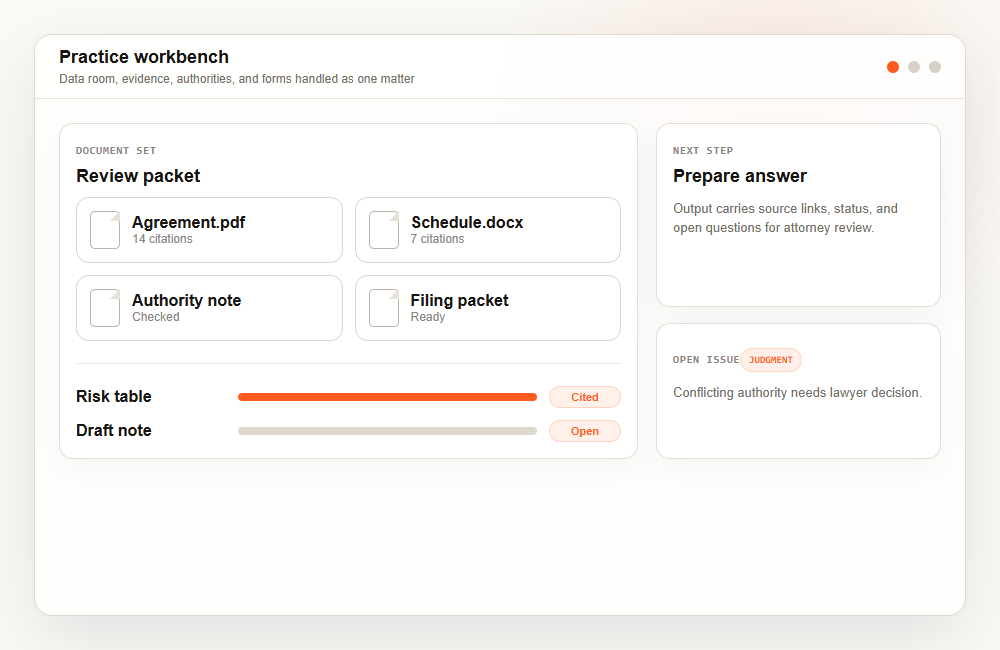
Discovery you finish
Goodman OS reads the full production - emails, transcripts, expert reports - and pulls admissions, date gaps, inconsistencies, and privilege flags into a table. Each finding links to its page, so your associate checks the source in one click.
Briefs in your firm's voice
Draft motions and statements of fact from your own precedent and the record. The Editor tightens the prose, and every proposition cites back to its authority.
A chronology that stays current
Facts, dates, witnesses, and open questions live in one searchable record your team shares - not scattered across memos and email.
Goodman OS reads, drafts, and surfaces - it never files for you. Your litigators decide what gets argued and how. It makes them faster; the judgment stays theirs.
Three tools, one case.
Review, drafting, and custom trackers - all cited to source, so your team verifies before it relies on anything.
Review the production, draft the brief, and research the dispute's questions - all in one cited workspace your lawyers control.
Explore Goodman OS ->Build your own intake forms, discovery trackers, and chronology tools. No code, no tech team. A senior associate's know-how becomes software the whole group runs.
Explore Owlious ->Answers on controlling authority, standard of review, or a jurisdictional wrinkle - each grounded in and cited to its source.
Explore Legal Research ->Straight answers.
How Goodman OS fits a live matter.
Does it decide what goes in the brief?
Can I trust what it pulls?
Does it use our precedent?
How does discovery review work?
Is our case data private?
Can we build our own trackers?
Send one production. Get it back cited.
Bring a real set from a live matter. Your team runs the review and checks every finding against the source.
Built for lawyers / Private by default / Cited to source